If you are deciding between West Oak Trails resale homes and newer options in North Oakville, you are really choosing between two different lifestyles. One offers a more established, ready-now setting, while the other offers newer housing and a community still taking shape. Understanding that difference can help you focus on what matters most for your next move. Let’s dive in.
West Oak Trails vs North Oakville
West Oak Trails is part of Oakville’s established residential fabric. North Oakville, by contrast, is the Town’s planned growth area north of Dundas Street and south of Highway 407, designed as a higher-density, mixed-use district that will continue developing in phases over time.
That planning difference shows up in everyday life. In West Oak Trails, the street network, parks, trails, schools, and transit structure are already in place. In North Oakville, many of those features are planned into the community, but some are still being rolled out as development continues.
Why buyers compare these areas
For many buyers, this is not just a question of old versus new. It is a question of whether you want more certainty today or more future growth tomorrow.
West Oak Trails tends to appeal to buyers who value an established neighborhood feel and a more settled streetscape. North Oakville often appeals to buyers who want newer homes, more compact housing options, and the long-term upside of a growing community.
Housing styles feel very different
West Oak Trails resale homes
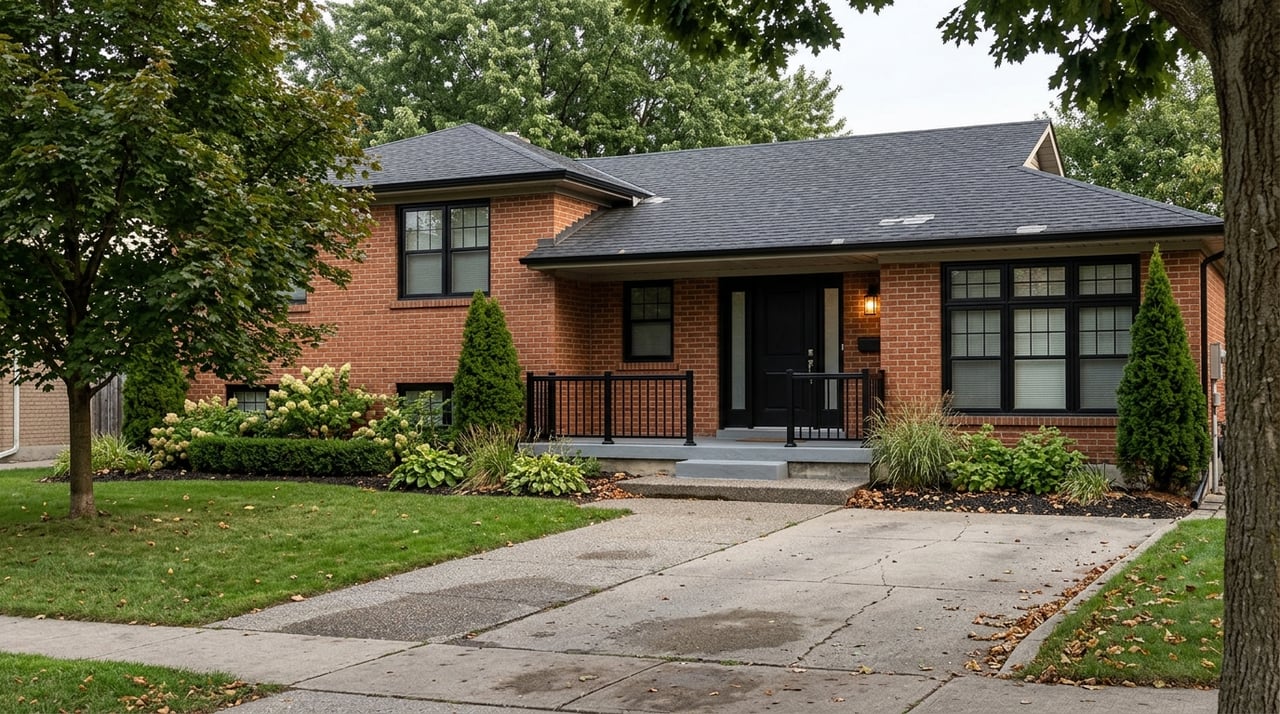
West Oak Trails resale inventory is still dominated by detached homes, with some townhouses and semi-detached homes mixed in. In practical terms, that usually gives you more choice if you want a conventional family-home layout and a neighborhood where the built form already feels consistent.
Lot sizes can vary by street and by phase of development, so every pocket should be assessed on its own. Still, the overall character leans toward traditional detached-home living in an established setting.
North Oakville new housing mix
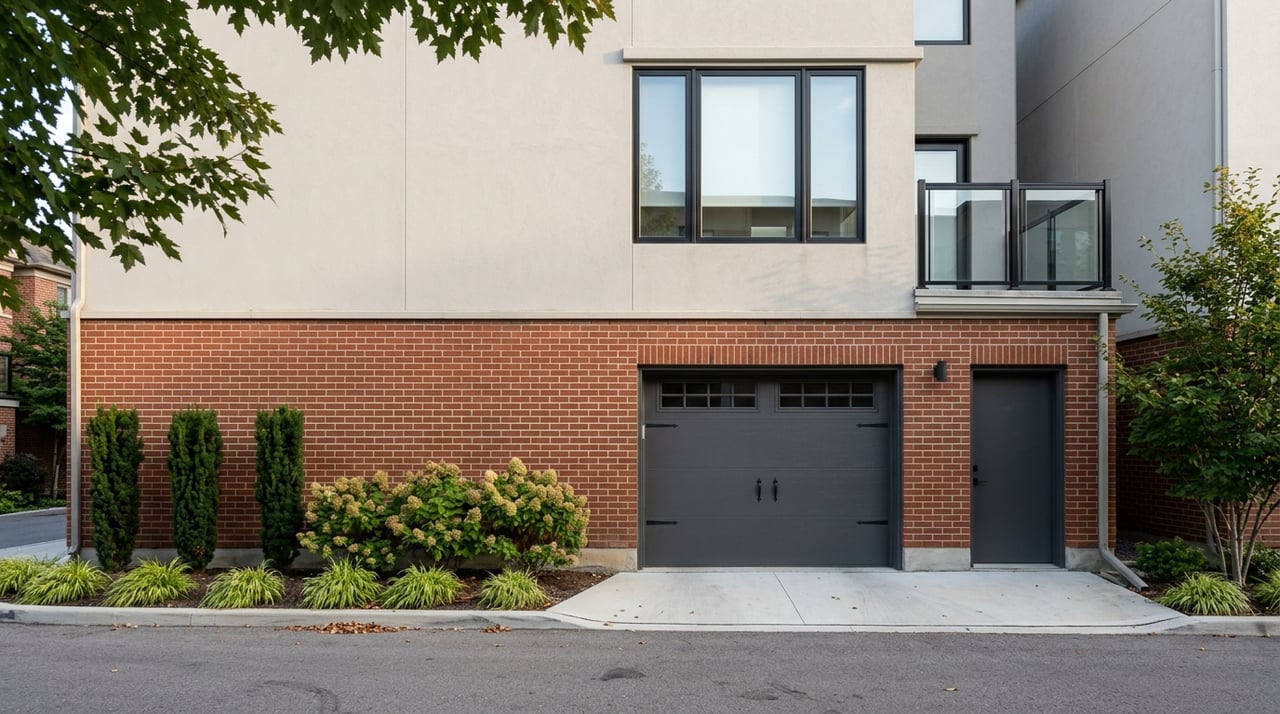
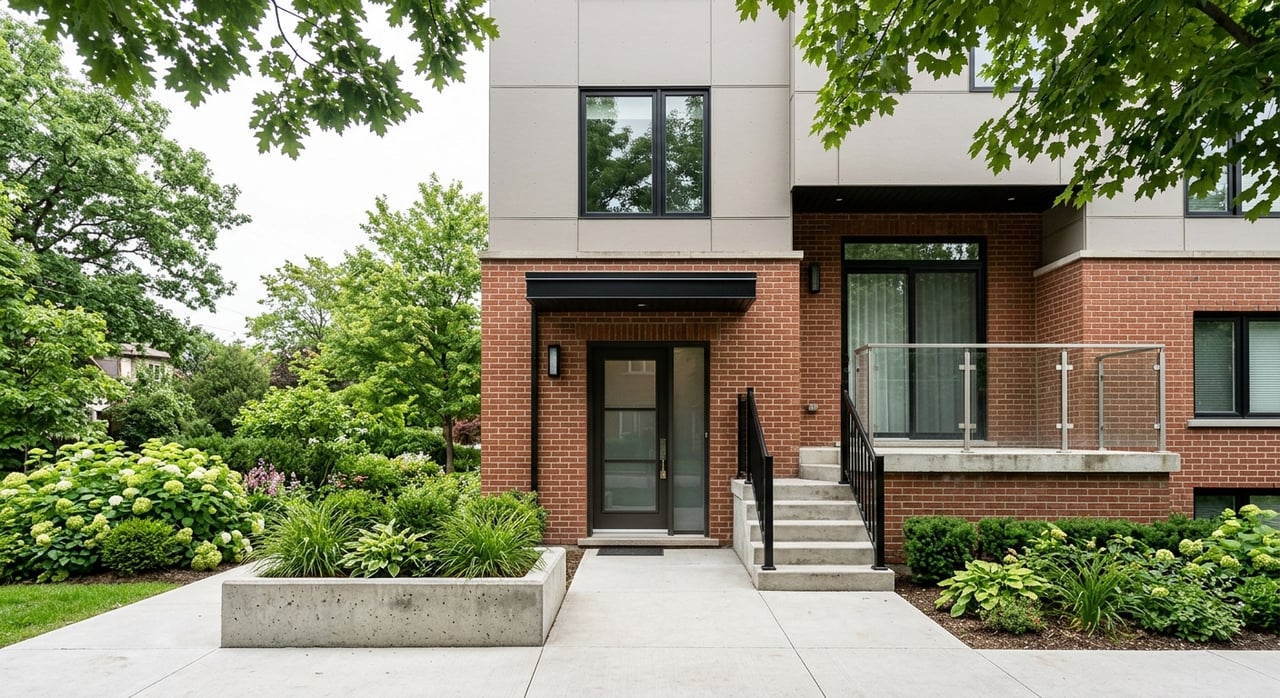
North Oakville has a materially different housing mix. The Town’s planning documents say residential development is primarily made up of triplexes and multiple-attached forms such as townhouses, back-to-back townhouses, block townhouses, stacked townhouses, and apartments or similar dwellings.
That means you are more likely to see compact housing forms and higher-density streetscapes. The Town’s urban design guidance also notes that townhouses provide more compact housing choices than single- or semi-detached homes.
What lot fabric means for you
A current North Oakville East development example helps show the difference. That proposal includes single-detached lots with frontages from 12.5 m to 15.24 m, while townhouse forms are shown at 6.1 m to 7.5 m.
This is only one project example, not a neighborhood-wide average. Even so, it illustrates the tighter lot fabric that often comes with newer North Oakville construction.
Established amenities matter
West Oak Trails is ready now
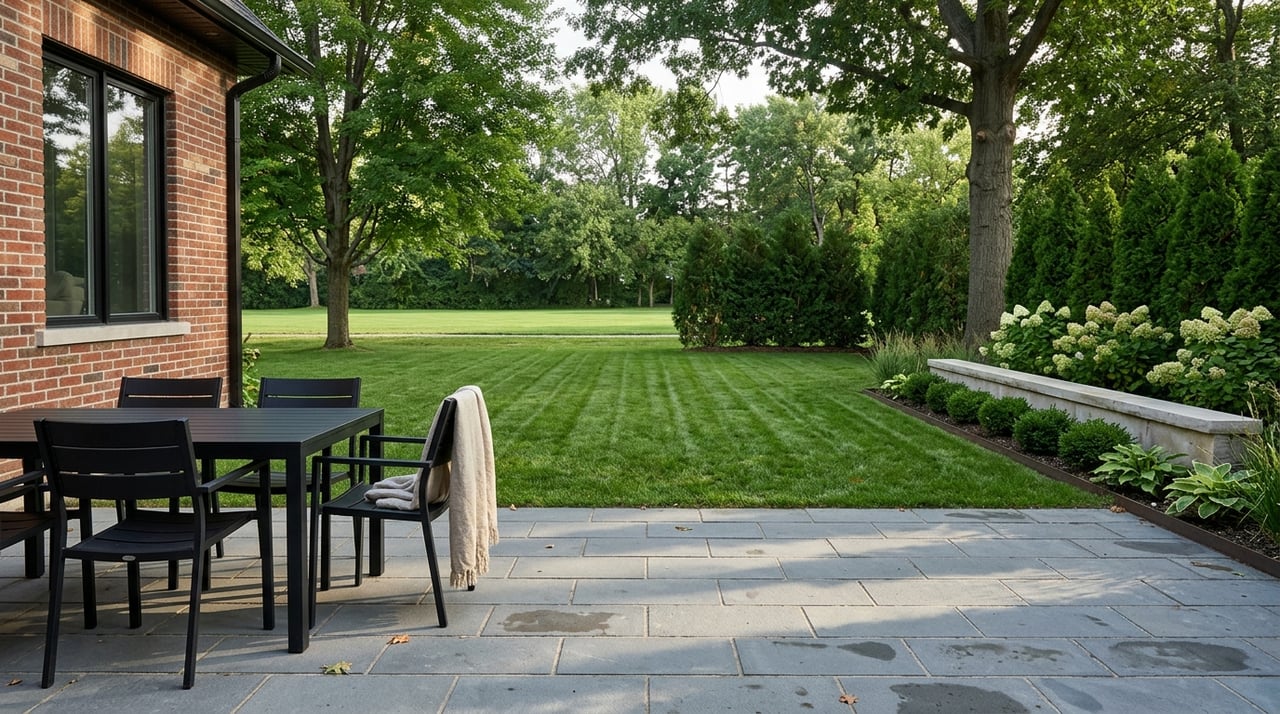
West Oak Trails has a clear advantage if your priority is immediate day-to-day convenience. The area already has an established recreation network, including the Sixteen Mile Creek West Bank Trail and West Oak Trails Park, which includes a splash pad and a pickleball court.
That can make a real difference when you want to use the neighborhood from day one instead of waiting for future buildout. Parks, trails, and community features are already part of the routine here.
North Oakville is still evolving
North Oakville has a strong long-term vision. The Town says the new communities include more than 900 hectares of natural heritage system land, four community parks, 10 neighborhood parks, and neighborhood centers intended to be about a five-minute walk from most homes.
That is a compelling framework, especially if you like the idea of a planned community with transit, cycleways, and pedestrian-friendly streets built into the design. The key point is timing: much of that value is tied to continued buildout.
Shops and services are part of the trade-off
The commercial side of North Oakville East is still developing. In 2026, the Town advanced a commercial study and Official Plan Amendment 338 to strengthen retail and service commercial policies so residents can access more everyday shops and services closer to home.
For buyers, that suggests long-term upside rather than immediate parity with an established area. If having a fully built-out convenience pattern matters today, West Oak Trails may feel more predictable.
Schools and neighborhood certainty
West Oak Trails has an existing school network already serving the area. Halton District School Board pages show West Oak Public School and Forest Trail Public School in the West Oak Trails family of schools, and Garth Webb Secondary School serves the area at 2820 Westoak Trails Boulevard.
That does not mean one area is better than another. It simply means West Oak Trails offers more immediate certainty for buyers who want to understand how the current school network fits into the neighborhood.
In North Oakville, school planning is still evolving as the community grows. The Halton District School Board is reviewing boundaries for the new Oakville NE #1 secondary school and French Immersion distribution for areas north of Dundas, which means the school map may continue to change over time.
Transit and commute patterns
West Oak Trails transit is established
West Oak Trails has a relatively mature transit pattern for Oakville commuters. Oakville Transit Route 13 Westoak Trails serves stops including Westoak & Upper Middle, Westoak & Third Line, Westoak & Bronte, Bronte GO Station, and Oakville GO Station.
Oakville Transit also notes connections with GO Transit’s Lakeshore West service at Bronte GO, Oakville GO, Clarkson GO, and Appleby GO. If commuting flexibility matters, that established bus-and-train pattern can be a meaningful advantage.
North Oakville transit is phased in
North Oakville is designed to support transit, walkability, and cycling, but service is phased in rather than fully mature from the start. The Town says transit in the new communities is introduced after about 100 homes are constructed, typically beginning with peak-hour service before expanding over time.
That does not make it a poor option. It simply means your commute experience may depend more on the exact stage of development in the area you choose.
Which area fits your priorities?
Choose West Oak Trails if you want stability
West Oak Trails may be the stronger fit if your priorities include:
- More detached resale inventory
- An established street and trail network
- Existing parks and recreation features
- A known school network
- A more mature transit pattern
- A settled neighborhood feel
If you value certainty, convenience, and a traditional lot-and-yard experience, West Oak Trails often checks those boxes more clearly.
Choose North Oakville if you want newer product
North Oakville may be the stronger fit if your priorities include:
- Newer construction
- A wider mix of housing forms
- More compact home options
- Planned mixed-use growth
- Long-term amenity expansion
- A community designed around future density and connectivity
If you are comfortable buying into an area that is still growing, North Oakville can offer a different kind of opportunity.
The real decision is lifestyle
At a high level, West Oak Trails is the more settled, resale-driven choice. North Oakville is the more future-oriented, planned-growth choice.
Neither is automatically better. The right fit depends on whether you want immediate livability and established neighborhood patterns, or whether you prefer newer housing and are comfortable with a community that is still adding schools, commercial services, parks, and transit over time.
If you are weighing West Oak Trails against North Oakville, a local, property-by-property comparison can make the decision much clearer. The team at Raymond Pace can help you compare housing type, neighborhood fit, commute patterns, and long-term value so you can move with confidence.
FAQs
What is the main difference between West Oak Trails and North Oakville?
- West Oak Trails is an established resale area with existing parks, schools, trails, and transit, while North Oakville is a newer planned growth area that is still being built in phases.
Are West Oak Trails homes usually detached homes?
- West Oak Trails inventory is still dominated by detached homes, with some townhouses and semi-detached homes also available.
Does North Oakville have more townhouses and compact homes?
- Yes. Town planning documents show North Oakville includes more higher-density housing forms such as townhouses, stacked townhouses, back-to-back townhouses, triplexes, and apartments.
Is West Oak Trails better for established amenities?
- West Oak Trails has a maturity advantage because its parks, trails, schools, and transit structure are already in place for day-to-day use.
Are schools still changing in North Oakville?
- Yes. The Halton District School Board is reviewing school boundaries and French Immersion distribution for parts of north Oakville as the area grows.
Which Oakville area is better for commuters?
- West Oak Trails currently has the more established transit pattern, including Route 13 service and connections to GO Transit, while North Oakville transit is phased in as development expands.