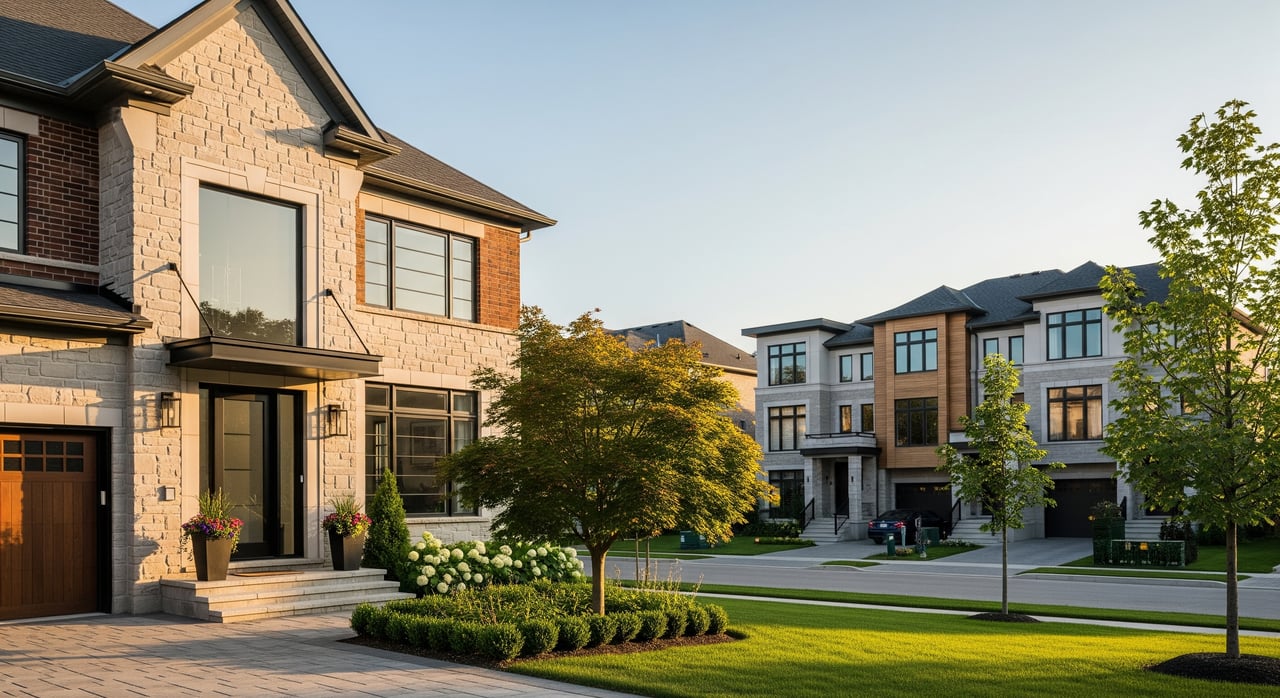
Trying to choose between a detached house or a townhome in West Oak Trails? You are not alone. Families often weigh space, budget, and maintenance to find the best fit for daily life. In this guide, you will get a clear, local comparison, a simple way to estimate monthly costs, and a checklist to make your decision easier. Let’s dive in.
West Oak Trails snapshot
West Oak Trails is a suburban community in northwest Oakville with planned subdivisions, trails, parks, and everyday amenities. Most homes were built in the 2000s and 2010s, so floorplans and lots follow modern suburban layouts. You will find a mix of detached houses and townhomes, including both freehold and condominium townhouse options. Commuting access and proximity to shopping and recreation can shape whether you prioritize yard size or lower maintenance.
Detached vs townhome overview
- Detached homes: more space inside and out, higher privacy, full control of maintenance, typically higher purchase price and carrying costs.
- Townhomes: lower entry price in many cases, efficient layouts, lower exterior upkeep, possible monthly condo fees if part of a condo corporation.
- Your fit depends on how you balance yard and flexibility with budget and maintenance tolerance.
Parking and storage
Detached
- Often include attached garages and driveways that fit multiple vehicles.
- Easier to add storage solutions or plan for EV charging in a garage or driveway.
Townhome
- Parking varies by type: private single or tandem garage, driveway space, or assigned surface stall.
- Condominium townhomes may have rules on visitor parking and assigned stalls. Confirm dimensions, bylaws, and garage insulation if you plan to use the garage as storage or a workspace.
Outdoor space and yards
Detached
- Typically larger front and rear yards with room for decks, playsets, or a shed.
- Lot depth and frontage shape how usable the space feels day to day.
Townhome
- Usually smaller private areas like a patio, backyard, or rooftop terrace. Some freehold townhomes on deeper lots still offer good yard space.
- In condo complexes, shared green areas can supplement smaller private yards. Ask about sun exposure, fencing, and any setback rules.
Interior layouts and flexible space
Detached
- Wider floorplan choices with 3 to 5 or more bedrooms common, larger main floors, and basements with expansion potential.
- Easier to reconfigure or add rooms, subject to permits.
Townhome
- Efficient layouts with 2 to 4 bedrooms typical. Open main floors suit everyday family living.
- Basements may be smaller or not present. Not all basements or units support legal accessory suites, so confirm zoning and code early.
Privacy and noise
Detached
- More separation from neighbors and fewer shared walls often means better privacy and less noise.
Townhome
- Shared walls and floors can transmit sound. If part of a condo, review any rules on quiet hours and renovations, and ask about wall assemblies and sound attenuation.
Maintenance and lifecycle costs
Detached
- You manage all exterior items like roof, siding, driveway, lawn care, and snow clearing.
- Larger structures and more systems can mean higher long‑term maintenance. Most homes in Oakville use municipal services, which simplifies utilities compared to rural systems.
Townhome
- Condominium townhomes charge monthly condo fees that usually cover exterior maintenance, landscaping, snow removal, building insurance for common elements, and sometimes amenities.
- Freehold townhomes place maintenance on the owner but the exterior footprint is smaller, which can reduce absolute costs compared to many detached homes.
Renovation and suite potential
Detached
- Often easier to add an addition, expand a garage, or pursue a legal accessory suite, subject to Town of Oakville zoning and permits.
Townhome
- Renovations are typically interior and rear‑yard focused. Condo rules can limit changes to common elements.
- Secondary suite or rental options depend on municipal zoning and, for condos, corporation rules that may restrict rentals or subletting.
Resale considerations
Detached homes in Oakville often command higher prices and attract families seeking more space. Townhomes appeal to first‑time buyers, young families, and downsizers who value convenience and cost control. Market dynamics change by cycle, so current MLS activity and sold data should guide expectations.
What it might cost each month
You can compare carrying costs by building a simple budget for each property. Update figures with current rates and property details.
Step 1: Estimate your mortgage payment
- Principal equals purchase price minus your down payment.
- Use your lender’s interest rate and chosen amortization to find a monthly payment.
Step 2: Add property taxes
- Annual property tax equals assessed value times the combined municipal and education tax rate published by the Town of Oakville.
- Divide the annual total by 12 for a monthly amount.
Step 3: Include insurance and utilities
- Home insurance is usually higher for detached homes due to larger structures and replacement costs.
- Utilities like electricity, natural gas, and water are often higher for detached homes than for most townhomes.
Step 4: Account for maintenance and condo fees
- Detached: set an annual allowance for exterior upkeep and major items, then divide by 12.
- Townhome: include monthly condo fees if applicable and review what they cover. Ask about reserve fund health and any history of special assessments.
Monthly budget template
- Mortgage payment: $_____
- Property taxes (monthly): $_____
- Home insurance: $_____
- Utilities: $_____
- Maintenance and repairs: $_____
- Condo fees (if applicable): $_____
- Total monthly carrying cost: $_____
Affordability stress test
Create two scenarios that reflect your short list: one detached and one townhome. Model a small rate increase, a modest rise in property taxes, and a typical condo fee increase if applicable. Compare total monthly costs and your buffer for savings and lifestyle.
Family decision checklist
- Space vs cost: detached gives more indoor and outdoor space at a higher price, townhome trades some space for budget and convenience.
- Yard and play: fenced private yard in detached vs smaller private areas and possible shared green space in a townhome.
- Commute and routine: prioritize proximity to major corridors, transit, and daily errands based on your schedule.
- Maintenance comfort: full control and responsibility with a detached, bundled services and rules with a condo townhome.
- Resale flexibility: detached often appeals to a broad family market, while townhomes attract entry buyers and downsizers.
What to ask and check
For all homes
- Zoning and permitted changes, recent capital upgrades, and the age of key systems like roof, furnace, AC, and windows.
- Recent property tax bills and typical monthly utilities. Confirm school catchment boundaries with the relevant boards.
Townhomes
- Condo declaration and by‑laws, current monthly fees, reserve fund study, meeting minutes, and any special assessments.
- Rules on rentals, pets, renovations, parking allocations, and visitor parking.
Detached
- Lot dimensions, setbacks, and any encroachments or easements.
- Drainage and grading, tree and landscaping upkeep, and municipal sidewalk or road responsibilities.
Where to get current numbers
- MLS and REALTOR systems for active listings and recent sales in West Oak Trails.
- Regional market reports for price and inventory trends.
- Town of Oakville for property tax rates, bylaws, zoning, and permits.
- MPAC for assessed values and property classes.
- Halton Region and Town of Oakville transit pages for routes and GO access.
- Halton District and Halton Catholic school boards for catchment maps and school information.
- Condominium corporation documents for fees, financials, and restrictions.
- Major lenders for interest rates and mortgage options.
Your next step
A side‑by‑side, property‑specific analysis is the best way to choose with confidence. Our team can pull recent West Oak Trails sales, outline carrying costs for a detached vs a townhome that match your wish list, and flag any condo or zoning considerations before you offer. If you are ready to compare options and run the numbers, book a consult with Raymond Pace.
FAQs
What is the current price gap between detached and townhome in West Oak Trails?
- Prices shift with the market, so use recent MLS sales in West Oak Trails to compare typical detached listings with similar townhome options before you write an offer.
Do West Oak Trails townhomes usually have condo fees or are they freehold?
- Both exist in the area, so confirm if a townhome is freehold or part of a condominium corporation and review the fee inclusions when applicable.
How much yard space can I expect from a townhome vs a detached house?
- Detached homes typically provide larger front and rear yards, while townhomes often have smaller private areas with some complexes offering shared green space.
Are there family‑sized townhome layouts with 3 or more bedrooms?
- Yes, many West Oak Trails townhomes offer 3 or 4 bedroom layouts, though square footage and basement options vary by complex and build type.
How do property taxes compare for townhomes and detached in Oakville?
- Property tax depends on assessed value and the published municipal and education rates, so compare each home’s assessed value to estimate monthly taxes.
Can I add a legal secondary suite in a West Oak Trails home?
- It can be possible, especially in some detached homes, but you must confirm Town of Oakville zoning, permits, and building code, and review condo rules for townhomes.
What are typical maintenance and utility differences year over year?
- Detached homes generally carry higher exterior maintenance and utility costs, while condo townhomes trade some of that for monthly fees that cover common elements.